

Scams can happen anytime throughout the year, but fraudulent activity often increases during the busy holiday season. During International Fraud Awareness Week (Nov. 15-21) and on Utility Scam Awareness Day (Nov. 18), PECO wants to help you spot scams and act if you think you’ve become a target.
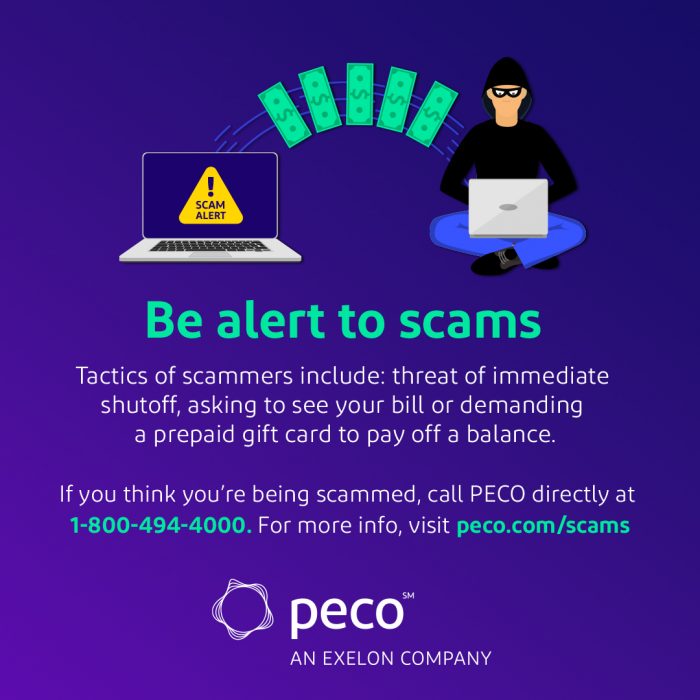
In October 2026, PECO customers reported 68 scam incidents, up from 42 in September. With the holidays and increased cold-weather energy use already adding to household expenses, knowing the signs of a scam can help protect your personal information and your wallet.
One common scam starts with a caller threatening to disconnect your service unless you pay immediately using a prepaid debit or credit card. The caller may say they’re a PECO employee and tell you to purchase a prepaid card at a convenience store or pharmacy, then call back to complete the “payment.”
These calls are meant to create fear and urgency, and they can sound convincing. Scammers can even use artificial intelligence (AI) and other technology to manipulate caller IDs or copy official company greetings and recordings. Here’s how to protect yourself during the holidays and year-round.
Know the warning signs
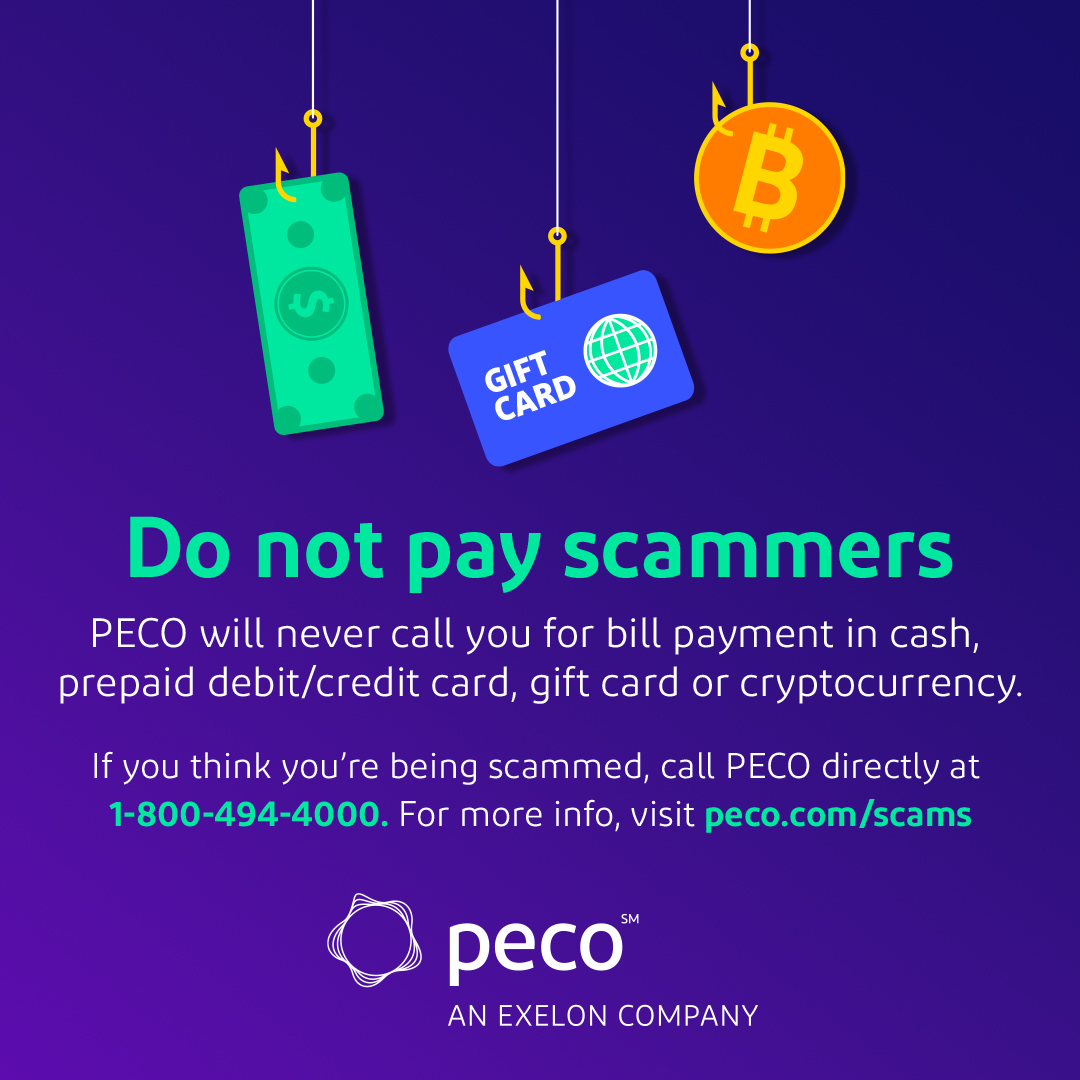
PECO will never:
Demand immediate payment using cash, a prepaid debit card, or cryptocurrency.
Call to request your PECO account number or personal information, such as your Social Security number, driver’s license number, or bank statement.
Visit your home or business to discuss disconnecting services without contacting you first.
Ask you to pay on-site for services.
Check before letting someone into your home
Field employees wear uniforms or clothing with the PECO logo and carry company identification with the PECO logo and their name. Be cautious if someone is wearing clothing with an old or damaged company logo and never allow someone who claims to represent PECO or a PECO contractor into your home unless they show proper photo identification.
Take a moment to verify
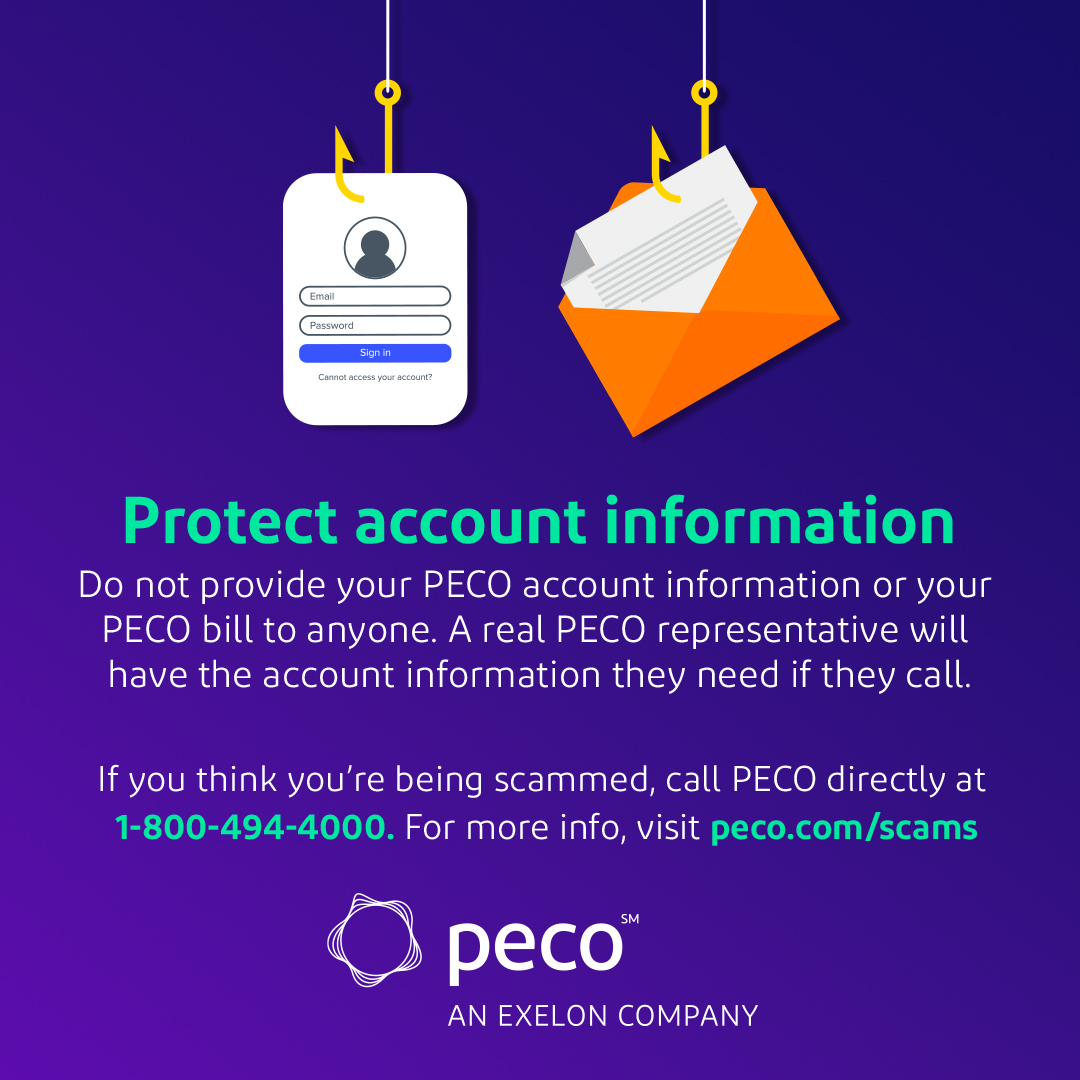
If something doesn’t feel right, stop and check your account before taking action. You can use your printed bill, your PECO.com account, or the PECO mobile app to confirm your account status, balance, and payments.
For an email that appears to come from PECO, make sure the sender’s name and information match the email address. Watch for typos and small changes to images.
If someone calls to collect a PECO bill payment, the caller should be able to provide your account name, account address, account number, and current balance. If the caller cannot provide that information, the call is likely not from PECO.
If you’re unsure whether a call or home visit is legitimate, contact PECO at 800-494-4000.
Real help is available
Rising costs are a concern for many families and businesses, and scammers may try to take advantage of that financial stress. Customers who are having difficulty paying their energy bills have legitimate options. As part of the Exelon Promise, we’re advocating for short and long-term solutions to help keep bills as low as possible while delivering safe and reliable service. PECO offers bill assistance, flexible payment arrangements, and energy-saving resources. Visit peco.com/help to learn more.
If you believe you have been targeted by a scam, contact your local police and call PECO immediately to report what happened. More scam prevention information is available at peco.com/scams.