

If you’re considering an all-electric or plug-in hybrid vehicle, you may have these questions about charging:
- Will I need an expensive electrical upgrade?
- Will my electric bill soar?
- Can an EV handle cold weather and long trips?
National Drive Electric Month is an opportunity to look past some common misconceptions and understand how EV charging can fit into your routine.
Charging at Home
Some think that if you own an EV, you need to install a faster home-charging system. In reality, the right option depends on how far you drive and how much time your vehicle spends parked at home.
Some drivers can replenish their daily mileage with Level 1 charging, which uses a standard 120-volt outlet. These are the outlets you’ll typically find in and around your home. Level 2 charging uses a 240-volt connection, the same voltage level used by larger appliances like clothing dryers. This may make more sense for drivers who travel farther, have less time to charge, or drive vehicles with larger batteries.
Before selecting equipment, consider your typical mileage, parking schedule, and access to charging away from home. If you’re thinking about Level 2 charging, have a qualified electrician evaluate your home’s electrical capacity and determine what installation work may be necessary. The fastest charger is not automatically the best value. Choosing equipment that matches your routine can help you avoid an unnecessary upgrade.
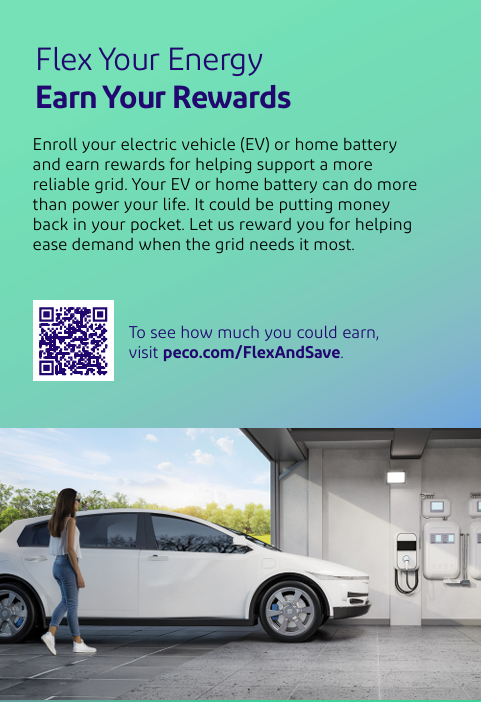
EV drivers can also take advantage of PECO’s Flex & Save Program. Once enrolled, PECO will make small automatic adjustments to your EV charging during periods of high energy demand. Those small changes could add up to $120 in rewards per year.
Charging for your Business
If you own a business or think your employer would consider installing EV chargers at your workplace, check out PECO’s Commercial EV Charging Program.
The program provides rebates for commercial electric rate customers who install EV charging stations. Townships, local governments, and non-profits are also eligible to participate.
Hitting the Road
Charging is only one part of preparing to hit the road. Cold weather can reduce an EV’s driving range, particularly when the vehicle also uses energy to warm the cabin and battery. That does not make winter driving impractical, but it does make planning more important.
Warming the vehicle while it is still plugged in allows the battery and cabin to draw electricity from the charger rather than relying entirely on stored battery energy after you start driving. Keeping tires properly inflated and leaving an extra range buffer can also help drivers prepare for changing conditions.
Longer trips require similar preparation in any season. Weather, terrain, speed, and cabin temperature can all affect your battery range. You can make trips more predictable by reviewing the route and locating compatible chargers before leaving. Some newer EV models can also incorporate charging stops into navigation based on the vehicle’s range and available stations.
Making the Right Charging Choice
There is no single charging solution for every EV driver. The right approach depends on how far you travel, how long your vehicle is parked, and even the weather. Understanding those factors can help you avoid additional expenses, manage charging costs, and make driving electric part of a convenient daily routine.
Learn more about EV ownership, charging, and the tools available to PECO customers in our electric vehicle resource center. Drivers can also visit PECO’s residential EV page to learn more about home-charging options.